Trillium Lake Loop
The loop
The USFS describes the Trillium Lake Loop as a “2-mile trail” that was “built to be barrier free”, with sections of boardwalk and compacted rock. The best hikes page sets it beside the other day walks, and the USFS Trillium Lake page has the current details.
The lake and the view of the summit
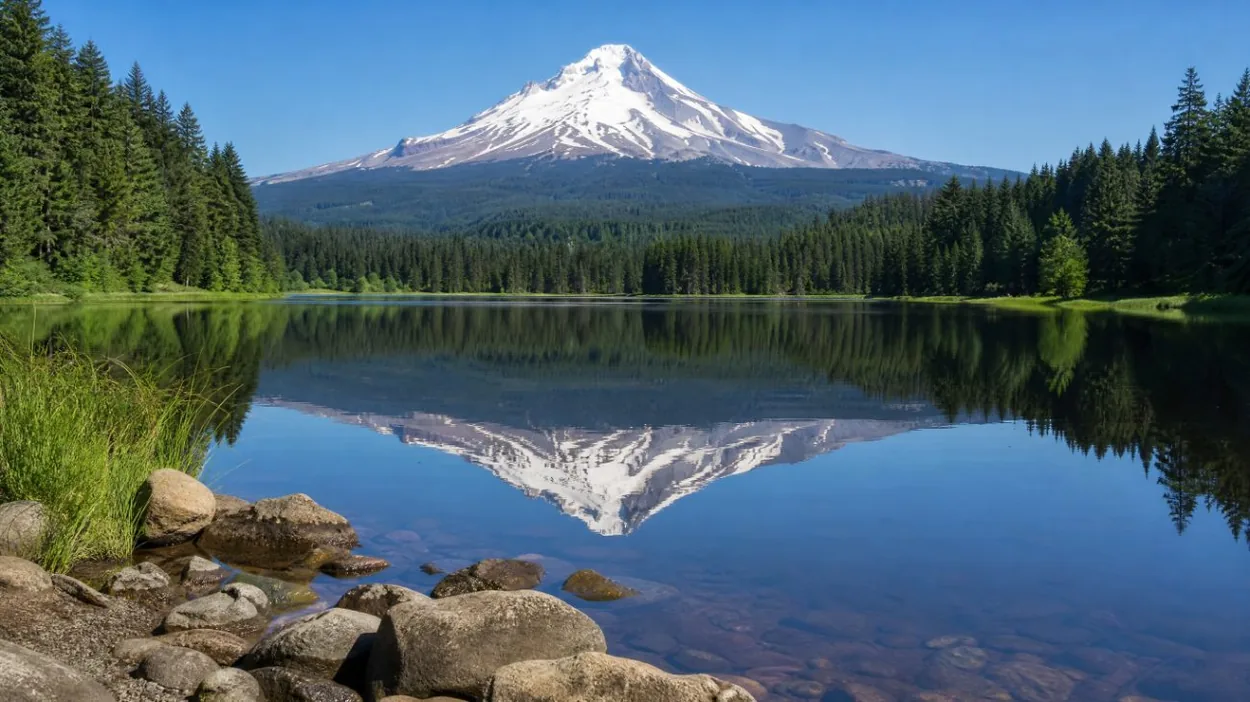
Trillium Lake covers 63 acres, and the USFS allows non-motorized boats only. Travel Oregon describes the lake as having an “impressive view of the summit”, and the view of Mount Hood above the water is the one shown at the top of this page. The summit is 11,240 feet according to the USGS and the USFS, although some surveys give 11,249 feet. The mountain above the lake is a volcano, not an extinct one: the USGS rates its threat level “Very High”, and the volcano page explains what that means.
The pass rule that catches visitors
Passes on Mount Hood are not interchangeable, and Trillium Lake is the clearest example. At most USFS trailheads, a Recreation Pass means the day-use fee, a Northwest Forest Pass or an Interagency (America the Beautiful) pass. At Trillium Lake day use, the USFS states that “the only recreation pass accepted in lieu of day use fee payment is the ... Annual Northwest Forest Pass”. A visitor holding only an Interagency pass pays the day-use fee here. The fee season for 2026 ran May 1 to December 1, per the USFS.
Two nearby places show how much the rule varies:
- Mirror Lake accepts the day-use fee, the Northwest Forest Pass or the Interagency pass from May to October (USFS). See the Mirror Lake page.
- Lost Lake is run by a resort under a USFS special use permit; a resort day-use fee applies and the USFS states that “The Northwest Forest Pass and Interagency Pass are not accepted.”
The passes and permits page sets out every rule in one place, and the USFS passes page is the official reference.
Winter at Trillium Lake
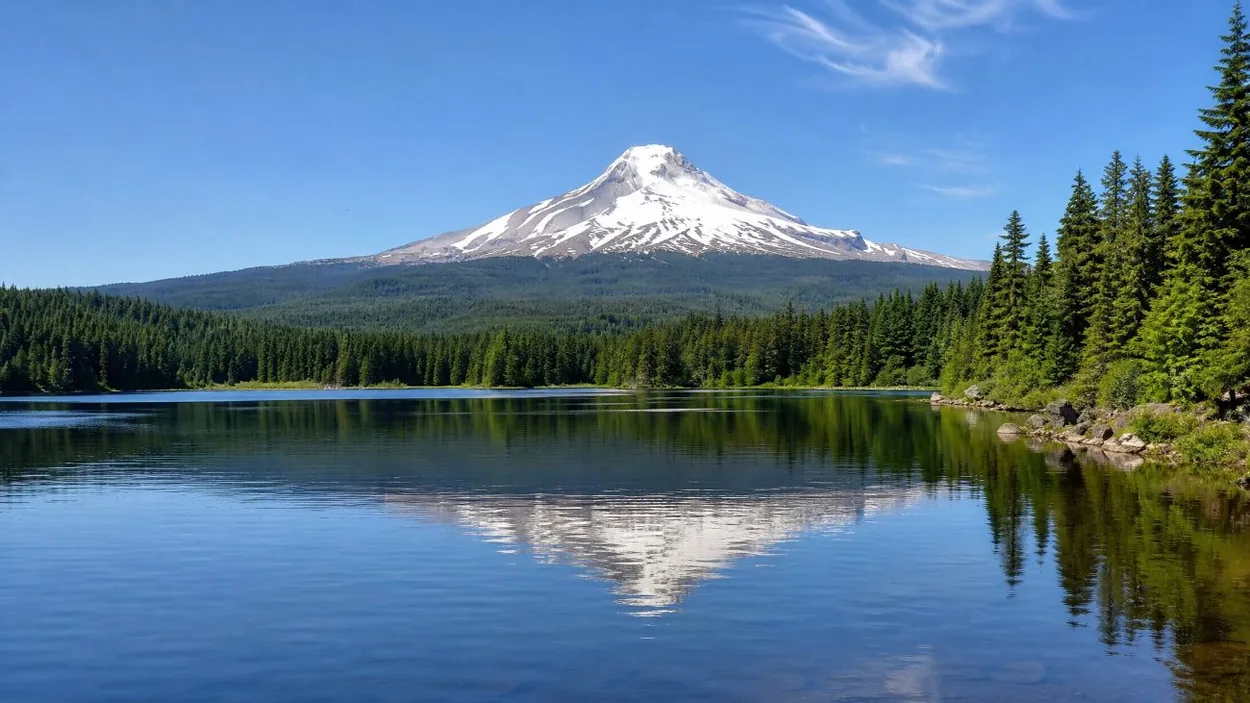
Two dates govern the cold months. The vehicle gate is closed from December 1 to April 1, so the road to the lake is shut to cars in that period, and an Oregon Sno-Park permit is required from November 1 to April 30 (USFS). Winter visits therefore start from the Sno-Park rather than the summer lot. Chain rules on US-26 are posted on signs and on TripCheck.com; the getting there page explains the Oregon chain law.
Conditions and closures
Recreation sites around the mountain can close at short notice for storms, fire or maintenance. Wildfires closed a number of trails on the east side of the mountain in late summer 2026; check the Mt. Hood National Forest alerts page before setting out.
Trillium Lake and the day tours
None of the six GetYourGuide listings names Trillium Lake as a stop. The From Portland: Columbia Gorge Waterfalls and Mt. Hood Tour gives 40 minutes at Timberline Lodge & Ski Area within an 8-hour day, and its listing states a “maximum typical walk distance: ½ mile round trip”; the same listing says the tour is not suitable for wheelchair users. The Mt Hood & Columbia River Private tour lists a 1-hour “Mount Hood photo stop” without naming the place, so it cannot be assumed to be Trillium Lake. The which tour page matches the products to the time available.
A visitor carrying only an Interagency pass can cover Mirror Lake with it and pay the day-use fee at Trillium Lake, since the USFS accepts the Northwest Forest Pass only at Trillium.
Frequently asked questions
Is the Trillium Lake loop wheelchair accessible?
The USFS states that the 2-mile loop was “built to be barrier free”, with boardwalk and compacted rock. Current conditions are on the USFS page.
Does the America the Beautiful pass work at Trillium Lake?
No. The USFS accepts only the annual Northwest Forest Pass in lieu of the day-use fee here. See passes and permits.
Are boats allowed on Trillium Lake?
Non-motorized boats only, according to the USFS. The lake covers 63 acres.
Can you visit Trillium Lake in winter?
The vehicle gate is closed December 1 to April 1 and a Sno-Park permit applies November 1 to April 30 (USFS). The best time to hike page covers the seasons.